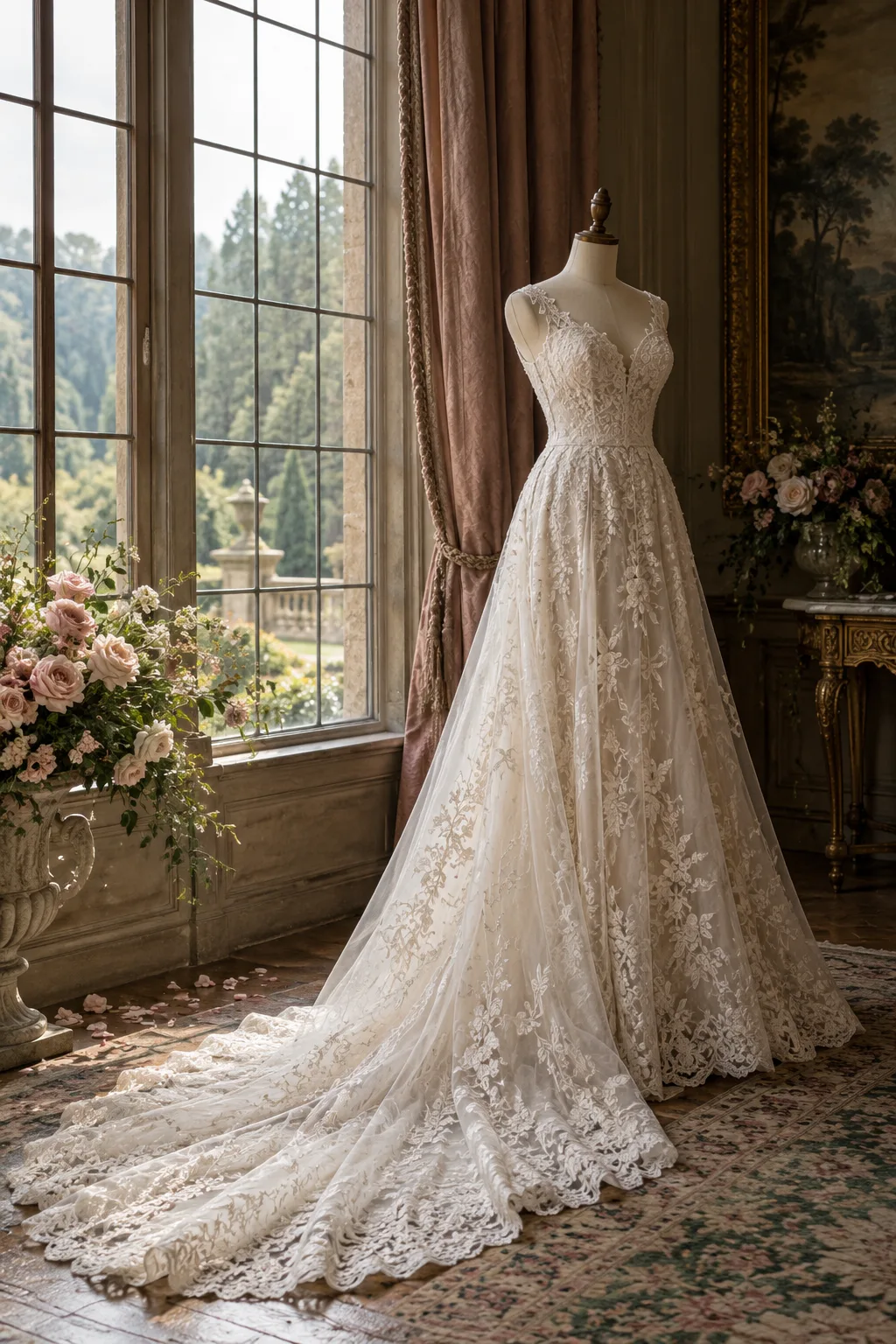
Bridal Fashion
Victorian-Inspired Wedding Dresses: Timeless Styles for Modern Brides
Choose romantic lace, sleeves, silhouettes, and accessories with practical advice for a modern Victorian-inspired bridal look.
Read the storyTHE ROMANTIC WEDDING JOURNAL
Considered details. Meaningful celebrations.
A little romance for every chapter.
 THE ART OF
Some of the most memorable wedding details are quiet ones: the lace you cannot stop touching, a garden path lined with people you love, a handwritten note waiting beside a place setting. Victorian Rose Bridals is an independent editorial publication for couples who want a thoughtful celebration with a romantic point of view.
Our guides connect bridal fashion, practical planning, vintage-inspired design, honeymoon preparation, and meaningful gestures. You will find ideas to adapt rather than a single wedding formula to follow. Start with the part of the day that matters most to you, then build a plan that supports it.
Romantic style does not require an elaborate venue or an unlimited budget. A clear palette, comfortable clothing, useful information for guests, and a few well-chosen details can create a celebration that feels complete. We favor decisions with a purpose: beautiful objects that belong in the setting and arrangements that make the day easier to enjoy.
Use this journal as a working companion. Read a guide before an appointment, bring its questions to a supplier, and adjust the suggestions to your circumstances. Your venue, priorities, traditions, and guest needs should shape the final choices. Inspiration is most useful when it leads to a practical next step.

Begin bridal shopping with the silhouette and the way you want to feel. An A-line skirt can give a gentle sense of volume, while a fuller gown makes a more formal statement. A clean, narrow outline can feel equally romantic when paired with lace sleeves or a carefully chosen veil. Try different shapes before narrowing the search.
Victorian-inspired style is particularly expressive through detail. A defined waist, covered buttons, a scalloped neckline, or botanical embroidery can suggest the mood without making the outfit feel like a costume. Choose one or two focal points. If the bodice is intricate, simple earrings may give the workmanship more room to be seen.
Treat comfort as part of the design. Sit, turn, reach, and walk in the sample. Consider the venue's surfaces and the amount of time you will spend standing. Ask how a train will be managed and whether sleeve adjustments are feasible. Shoes, underlayers, and alterations belong in the complete outfit plan from the beginning.
Seasonal styling can be flexible. A removable layer may be more useful than choosing a heavier gown solely for a cool ceremony. For warmer settings, ask about fabric weight and breathability rather than judging by appearance alone. Our Victorian-inspired wedding dress guide explores these choices, while the dress shopping timeline helps turn them into appointments and written questions.
Start planning with three shared priorities. Perhaps you care most about an intimate ceremony, a relaxed meal, and time with guests. Write those priorities down before comparing venues or building decoration boards. They provide a reference when attractive ideas compete for the same time or money.
A useful budget separates essential arrangements from optional styling. Compare complete supplier quotes, including delivery, setup, collection, and any applicable additional charges. Keep a contingency amount for changes rather than assigning every available dollar immediately. A small celebration still needs a clear plan for movement, seating, meals, and departures.
Map the day from a guest's perspective. How will people find the entrance? Where can they sit between the ceremony and dinner? Who can answer an access question? Information can be an act of hospitality. Clear directions, realistic transitions, and a named contact often matter more than another decorative sign.
Use the planning table below as a sequence of decisions, not a universal calendar. Your venue and suppliers should confirm actual deadlines. For an outdoor event, agree the shelter plan and weather decision process before designing the ceremony backdrop. Our romantic garden wedding checklist explains the handover in more detail.
| Decision | What to confirm | Why it matters |
|---|---|---|
| Shared priorities | Three experiences you value most | Gives budget decisions a purpose |
| Setting & essentials | Guest count, access, shelter, services | Defines the practical plan |
| Outfit & suppliers | Written scope, lead times, total quotes | Turns ideas into commitments |
| Details & handover | Layout, schedule, named responsibilities | Makes the day easier to enjoy |

Let your setting establish the first layer of style. A garden with mature planting may need little more than a considered ceremony focal point and clear guest routes. A room with warm stone or dark wood may suit ivory linen, gentle rose tones, and restrained metal accents. Notice the features you already have before adding new ones.
For a Victorian-inspired atmosphere, borrow textures rather than filling the room with period props. Lace-like paper edges, softly gathered fabric, botanical flowers, and a few antique shapes can carry the idea. Repetition creates coherence: use one or two vessel styles and a small family of colors rather than a different treatment on every table.
Think about tables as places for conversation and food. Leave room for glassware, serving, and comfortable sightlines. Candlelight can create a warm mood, but confirm the venue's flame rules before buying supplies. Suitable approved alternatives can preserve the feeling where open flames are restricted. Decoration should remain compatible with the way the room works.
Seasonal palettes can be interpreted gently. Sage and warm white connect to foliage; dusty rose and champagne create a softer mood; a little burgundy can add definition to an evening setting. Our vintage color palette guide shows how to give each shade a role. For a smaller budget, begin with the choices in our vintage wedding budget guide and edit the idea before adding more objects.

A wedding card does not need to sound like a formal speech. Address both partners, name something you appreciate about their relationship, and offer a sincere wish for their shared life. A brief, specific memory can make a simple note feel personal. Leave out assumptions about children, money, or what married life ought to look like.
If you are writing for a colleague or a couple you do not know well, warmth and restraint work beautifully. Congratulations and a thoughtful wish are enough. For close friends, use a voice they recognize. Humor should be kind to both readers and still feel appropriate when the card is opened again years later.
Our wedding wishes and messages guide includes examples for different relationships. You can also browse celebration messages at MessageBlessings for a starting point, then rewrite the idea in your own voice. The same approach works for anniversary notes: remember something real, acknowledge the relationship with care, and let the message belong to the people receiving it.

Plan the trip around the experience you both want rather than an itinerary that looks impressive. Consider how much energy you will have after the wedding, how many transfers feel comfortable, and whether you prefer a familiar routine or a more active journey. Leave the arrival day manageable if you expect to be tired.
Build your packing list from the activities and climate, then check the luggage conditions for your exact bookings. Organizing resources such as BaggageBase's baggage and travel guides can help you identify questions to ask. Confirm applicable limits and conditions directly with the operating airline; a general guide cannot determine the allowance attached to every ticket.
For international travel, use official sources matched to your nationality and destination. The US State Department's international travel checklist is a useful starting point for US travelers. Check your own government's guidance where relevant, and verify entry and transit requirements for your route. Keep necessary documents and important contact information accessible offline.
Our honeymoon packing checklist helps divide shared items, create outfit combinations, and prepare an arrival pouch. Decide who will take wedding belongings home while you travel. A clear handover for the dress, gifts, and personal items prevents the first morning of the trip from becoming another wedding logistics exercise.

Thoughtful wedding gifts begin with listening. A registry choice is useful information about what the couple wants, even if another item seems more original. When there is no registry, consider their routines, storage space, and preferences before buying. A gift should fit the life they already enjoy rather than assign them a new hobby.
Experiences can be lovely when they are flexible and easy to use. Check location, expiry conditions, and extra costs before purchasing. Avoid fixing a date without agreement. Consumable gifts also need care: confirm preferences and choose a delivery time when someone will be home, especially if the couple is leaving on honeymoon.
Personalized everyday items work best for couples who already like them. For that category, matching apparel and mugs from GearCouple offers ideas to browse. Confirm names, sizing, taste, and return conditions before ordering. Our thoughtful wedding gift guide compares personalized items with practical upgrades, group presents, and experience gifts so you can make a considered choice.
Eight considered guides,
from the first idea to the journey after.
Choose romantic lace, sleeves, silhouettes, and accessories with practical advice for a modern Victorian-inspired bridal look.
Read the storyPlan a romantic garden wedding with a practical shelter, access, budget, ceremony, and supplier handover checklist.
Read the story
Explore five vintage wedding color palettes and learn how to test colors, textures, and finishes in your actual venue.
Read the storyBuild a shared honeymoon packing checklist for documents, clothing, carry-on essentials, luggage, and a calm arrival.
Read the story
Write a thoughtful wedding card with original examples for friends, family, colleagues, and celebrations you cannot attend.
Read the storyChoose thoughtful wedding gifts with practical advice on registries, flexible experiences, personalization, and group presents.
Read the storyPlan wedding dress appointments, ordering, alterations, collection, and transport around confirmed supplier timelines.
Read the story
Create an elegant vintage wedding on a budget with focused decor, complete quote comparisons, practical rentals, and thoughtful DIY.
Read the storyStart by asking salons about the ordering and alteration windows for your intended date. Made-to-order, custom, sample, and ready-to-wear options have different schedules. Work backward from confirmed supplier information and allow room for fittings. If time is short, ask about genuinely available options at the first inquiry.
Choose a coherent palette and a small number of details that suit the venue. Let fabric, flowers, and light provide texture rather than collecting unrelated props. “Timeless” is subjective; a look that reflects your taste and functions well in its setting is a stronger aim than avoiding every visible trend.
Protect the arrangements that let the day work: an appropriate venue, essential services, guest comfort, and the experiences you jointly value most. Compare complete quotes and retain contingency money. Reduce decorative scope when necessary before making the celebration difficult to navigate or the outdoor plan incomplete.
Choose a few details connected to your shared life: music with a story, a favorite meal, meaningful wording, or flowers you both enjoy. Give traditions a purpose rather than including them automatically. Personal does not have to mean handmade, expensive, or explained through a long sign at every table.
Pack for the actual itinerary and checked booking conditions. Keep documents, necessary medicines, valuables, and arrival essentials accessible. Build clothing combinations rather than unrelated outfits, and divide responsibility for shared items. Review entry requirements and travel guidance through the relevant official sources before departure.
A thoughtful message includes both partners, uses your natural voice, and offers a sincere wish. Add one specific detail when you know the couple well. Avoid assumptions about their future and jokes that could embarrass either person. A short note written with care is enough.
You do not need to solve the whole wedding at once. Choose the next decision that will make the others clearer: your priorities, a venue visit, the first dress appointment, or a conversation about guest needs. Keep a short list of open questions and ask the people responsible for each answer.
Explore the journal at your own pace, save what feels useful, and leave room to change an early idea. A beautiful celebration grows from decisions that belong together. The result can be romantic, practical, and distinctly yours—from the first invitation to the quiet morning after.
Open the planning notebook ↗